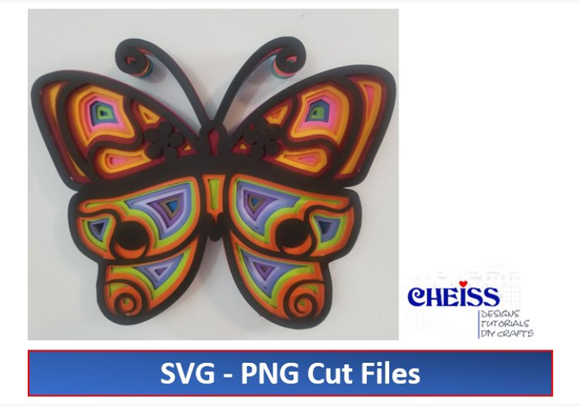
Understanding the 3D Butterfly Mandala: Symbolism, Art, and Modern Relevance
At first glance, a 3D Butterfly Mandala appears as a harmonious fusion of geometry and nature — a symmetrical pattern that seems to lift off the page or screen. But behind its visual appeal lies a rich tradition of spiritual symbolism, artistic craftsmanship, and practical applications that span meditation, design, and even digital creativity. For many, the 3D Butterfly Mandala is more than a decorative image; it is a tool for focus, a symbol of transformation, and a gateway to understanding how order and beauty can coexist.
This article explores what a 3D Butterfly Mandala truly is, why it resonates with so many people, and how you can engage with it — whether as an artist, a meditator, a designer, or simply a curious observer. We will walk through its origins, its layered meaning, the technical aspects that make it "three-dimensional," and the surprising ways it fits into modern life, work, and well-being.
What Exactly Is a 3D Butterfly Mandala?
A mandala, in the traditional sense, is a geometric configuration of symbols used in Hindu and Buddhist traditions to represent the universe. The word itself means "circle" in Sanskrit, and most mandalas are built around a central point with concentric rings and repeating patterns. A butterfly mandala takes this circular, symmetrical structure and infuses it with the form and symbolism of a butterfly — often using the wings, body, and antennae as the primary motifs.
When we add the 3D element, the design gains depth, shadow, and perspective. Unlike a flat, two-dimensional mandala, a 3D version uses techniques such as shading, layering, isometric projection, or digital rendering to create the illusion that the butterfly is emerging from the surface or floating in space. This extra dimension does more than make the image visually striking — it invites the viewer into a more immersive experience, where the mandala feels alive and dynamic.
Key Characteristics of a 3D Butterfly Mandala
- Symmetry and repetition: Like all mandalas, the butterfly pattern is typically mirrored along a central axis, with repeating shapes that radiate outward or inward.
- Depth cues: Shadows, highlights, gradient fills, and overlapping elements create the illusion of three-dimensional space.
- Butterfly anatomy: The design usually incorporates wing shapes, antennae, and a segmented body, often stylized into geometric or floral forms.
- Circular or radial composition: Even though the butterfly itself is not a perfect circle, the overall layout often respects a circular boundary or radial symmetry.
The Deeper Symbolism: Transformation, Balance, and Universe
Why pair a butterfly with a mandala? Both carry profound symbolic weight, and together they create a layered meaning that speaks to personal growth, cosmic order, and the beauty of change.
The butterfly is one of the most universal symbols of transformation. Its life cycle — from caterpillar to chrysalis to winged adult — mirrors the human journey of growth, struggle, and renewal. In many cultures, butterflies also represent soul, freedom, and the fleeting nature of beauty. The mandala, on the other hand, represents wholeness, unity, and the structure of the cosmos. It is a map of the self and the universe, drawn in concentric harmony.
When these two symbols merge in a 3D Butterfly Mandala, the result is a visual metaphor for transformation within order. The butterfly's wings become the radial patterns of the mandala, suggesting that change is not chaotic but follows a deeper, intelligent design. The 3D aspect adds a sense of emergence — the butterfly is not static; it is coming into being, rising out of the flat surface, much like the self emerging through awareness and growth.
Common Misunderstandings About Symbolism
- Mistaking it for mere decoration: While 3D Butterfly Mandalas are beautiful, they are often created with intentional symbolic layers. For many artists and practitioners, every curve and repetition carries meaning.
- Assuming it belongs only to Eastern traditions: While mandalas originated in Hindu and Buddhist contexts, the 3D Butterfly Mandala is a contemporary, cross-cultural creation. It blends Eastern mandala principles with Western art techniques and universal butterfly symbolism.
- Thinking 3D is purely digital: Three-dimensional effects can be achieved with traditional media — through shading with pencils, paints, or paper quilling. It is not exclusive to software.
Practical Relevance: From Meditation to Modern Design
The 3D Butterfly Mandala is not confined to galleries or spiritual centers. It has found practical and meaningful roles in several areas of modern life.
Meditation and Mindfulness
Coloring or tracing a 3D Butterfly Mandala can be a form of active meditation. The repetitive motion of filling in symmetrical patterns helps quiet the mind, while the 3D shading requires focused attention. Many people use mandala coloring books or digital mandala apps specifically to reduce anxiety and improve concentration. The butterfly theme adds an uplifting note of hope and renewal, making it especially popular in therapeutic settings.
Art Therapy and Emotional Expression
Art therapists often use mandalas to help clients express emotions that are difficult to verbalize. A 3D Butterfly Mandala, with its themes of transformation and depth, can be a powerful tool for individuals navigating life transitions — such as grief, career change, or recovery. The act of creating or coloring the mandala provides a safe, structured space to process feelings, while the butterfly symbolizes the possibility of emerging stronger.
Graphic and Web Design
In the design world, 3D Butterfly Mandalas are used as visual centerpieces for branding, packaging, website hero sections, and social media graphics. Their symmetry and depth naturally draw the eye, making them effective for logos or decorative elements. Designers often incorporate them into bohemian, spiritual, or nature-inspired themes, but they also appear in futuristic and tech-oriented contexts when rendered with metallic or neon 3D effects.
Digital Art and NFTs
The rise of digital art platforms and NFTs (non-fungible tokens) has given the 3D Butterfly Mandala a new stage. Artists create animated or interactive versions where the butterfly rotates, flutters, or responds to user input. These pieces are collected not only for their aesthetic but also for their symbolic resonance in a digital age — they represent the fusion of ancient wisdom with cutting-edge technology.
Home Décor and Crafts
Laser-cut wooden or acrylic 3D Butterfly Mandalas are popular as wall art, window hangings, and table centerpieces. The layered construction creates real physical depth, casting shadows that change with the light. Crafters also explore paper quilling, where thin strips of paper are rolled and shaped to form intricate 3D mandala patterns — a patient, rewarding hobby that yields stunning results.
How to Create or Engage with a 3D Butterfly Mandala
Whether you want to make one yourself or simply appreciate them more deeply, there are several pathways into the world of 3D Butterfly Mandalas.
For Beginners: Observation and Coloring
If you are new to mandalas, start by looking. Find a high-quality 3D Butterfly Mandala image online or in a coloring book. Notice how the artist uses shading to create depth — darker areas recede, lighter areas come forward. Trace the symmetry with your finger. Then, try coloring it. Use a gradient of colors from light to dark on each wing section to enhance the 3D effect. This simple exercise builds observation skills and relaxes the mind.
For Artists: Drawing and Rendering
To draw your own 3D Butterfly Mandala, begin with a central point and use a compass or ruler to create concentric circles. Sketch a butterfly outline over the circular grid, ensuring symmetry. The wings should align with the radial lines. Add repeating patterns inside the wings — circles, petals, teardrops, or spirals. To create the 3D illusion, decide on a light source and add shadows consistently on one side of each element. Digital artists can use software like Procreate, Adobe Illustrator, or Blender to add realistic lighting, textures, and even animation.
For Practitioners: Meditative Coloring
Approach the mandala with intention. Set aside 15–30 minutes in a quiet space. Breathe deeply before you begin. As you color, focus on the movement of your hand and the pattern emerging. If your mind wanders, gently bring it back to the mandala. The 3D shadows and highlights can serve as anchors for your attention — notice how they change as you add color. This practice is sometimes called mandala mindfulness and is widely recommended for stress reduction.
How the 3D Butterfly Mandala Fits into a Broader Worldview
One of the most compelling aspects of the 3D Butterfly Mandala is how it bridges ancient and modern, spiritual and practical. In a fast-paced digital world, it offers a moment of stillness. In a culture that often values speed over depth, it rewards patience and attention to detail. And in a time when many feel fragmented, the mandala's symmetry and the butterfly's transformation remind us that we are part of a larger, ordered whole.
Educators have begun using 3D Butterfly Mandalas in classrooms to teach geometry, symmetry, and cultural appreciation. Business leaders incorporate them into wellness programs and team-building workshops. Therapists use them as non-verbal communication tools. And everyday people — from hobbyists to serious artists — find joy and meaning in their creation.
Clarifying Common Assumptions
Before we conclude, it is worth addressing a few lingering assumptions that might limit your understanding or appreciation of the 3D Butterfly Mandala.
- "It's too complex for me to create." Not at all. While highly detailed mandalas require skill, simple 3D Butterfly Mandalas can be made with basic shapes and shading. Many free templates are available online for beginners.
- "It's only for spiritual people." You do not need any spiritual belief to enjoy or benefit from a 3D Butterfly Mandala. It can be purely aesthetic, mathematical, or recreational.
- "3D means it must be digital." As mentioned, traditional media like colored pencil, pastel, or paper quilling can produce convincing 3D effects through shading and layering.
- "Mandalas are outdated." On the contrary, they are experiencing a renaissance in digital art, mindfulness culture, and contemporary design. The 3D Butterfly Mandala is a perfect example of an ancient form evolving with new tools and contexts.
Conclusion: A Living Art Form for a Changing World
The 3D Butterfly Mandala is far more than a pretty picture. It is a meeting point of art, mathematics, psychology, and spirituality. It invites us to slow down, notice detail, and find beauty in structure. It reminds us that transformation — like the butterfly emerging from its chrysalis — can be graceful and ordered, even when it feels profound.
Whether you choose to color one as a mindful practice, draw one to sharpen your artistic skills, display one in your home for its calming energy, or study one to understand its symbolic layers, you are engaging with a tradition that spans centuries and cultures. And with the added dimension of depth, the 3D Butterfly Mandala brings that tradition into a new light — literally and figuratively.
So the next time you encounter a 3D Butterfly Mandala, take a moment to look beyond its surface. Trace the symmetry, notice the shadows, and consider the journey it represents. You might find that it reflects something meaningful about your own path — a pattern emerging, a transformation unfolding, a universe within.