Building Visual Narratives with the 100 Singapore Icons Set
When a designer needs to communicate a location’s essence quickly, a well-crafted icon set can do in a fraction of a second what paragraphs of text cannot. The 100 Singapore Icons Set has emerged as a practical resource for anyone looking to inject authentic local meaning into their work. Rather than a generic collection of shapes, this set offers a curated visual vocabulary that reflects Singapore’s unique blend of heritage, modernity, and multicultural life. Whether you’re a business owner updating a website, a teacher creating classroom materials, or a hobbyist designing invitation cards, understanding how to leverage such a set can significantly improve both the efficiency and the impact of your visual communication.
A Diverse Visual Language for Professionals and Creatives
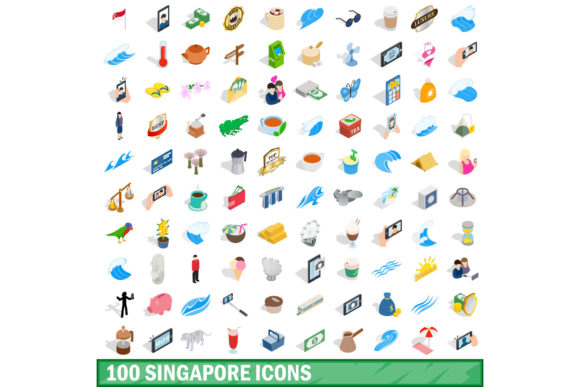
The 100 Singapore Icons Set does not limit itself to one theme. It spans categories like national landmarks (Marina Bay Sands, Merlion), hawker centre dishes (chilli crab, laksa), transport (MRT, taxi), cultural symbols (Chinese opera masks, Thaipusam kavadi), and everyday items (kopi cup, slippers). This diversity means that a single icon library can support projects ranging from tourism brochures to corporate training manuals. For a graphic designer, having 100 distinct yet cohesive vectors reduces the need to source from multiple places, streamlining the creative process. An educator covering Southeast Asian studies can use the icons to illustrate lessons without worrying about inconsistent styles or copyright clearance.
Streamlining Design Workflows
Creators often face the challenge of maintaining visual consistency across a campaign. The unified style of the 100 Singapore Icons Set — usually a flat, minimalist line or filled style with consistent stroke weights and rounded corners — allows designers to mix and match icons freely. For instance, a digital agency building a landing page for a Singapore travel package can use the same set for the hero image, feature bullets, and even the footer. This cohesion speeds up iteration and reduces friction during client presentations. Moreover, because the set is pre-optimised for digital use (SVG, PNG, or EPS formats are standard), developers can integrate the icons directly into code with minimal adjustment.
Educational Tools for Cultural Learning
Beyond commercial applications, the icon set serves as an accessible entry point for cultural education. A museum curator might use individual icons on exhibit labels to help visitors quickly identify the significance of an artifact. A language tutor teaching Singlish food terms can pair icons with vocabulary drills, making lessons more memorable. The 100 Singapore Icons Set helps bridge the gap between abstract cultural concepts and visual recognition. For example, the icon of a roti prata being flipped is instantly understood by locals, but also provides a clear reference for tourists or new residents unfamiliar with the dish. This dual function — practical for professionals and enlightening for learners — elevates the set beyond mere decoration.
Practical Applications Across Key Sectors
The real test of any icon collection lies in how well it solves problems in varied contexts. The 100 Singapore Icons Set demonstrates particular strength in tourism, local business branding, and user interface design, but its uses extend further.
Tourism and Hospitality Communication
Hotels, airports, and travel agencies rely on clear visual cues to guide international visitors. The icon for Changi Airport’s Jewel, the Singapore Flyer, and the iconic shophouses can be deployed on maps, brochures, or mobile apps to reduce language barriers. A small bed-and-breakfast owner can incorporate a hawker centre icon on their website’s “Nearby Attractions” page, instantly communicating that good food is within walking distance. Because the set covers both famous landmarks and subtle cultural touchpoints (like the iconic red phone booth or the National Day Parade insignia), it allows businesses to present a layered narrative of Singapore without overwhelming the audience.
Brand Identity for Local Enterprises
Startups and SMEs often lack the budget for custom illustration. The 100 Singapore Icons Set offers a cost-effective alternative that still communicates local authenticity. A new coffee brand could use the kopi and kaya toast icons on their packaging, social media posts, and website footer, establishing a relatable “Singaporean” identity. Similarly, a co-working space might use the MRT and bus icons on their “Directions” page to emphasise convenience. The key advantage is recognisability: local customers see these icons and immediately associate them with everyday life, building trust and familiarity. As the business grows, the same set can be scaled and recoloured to match evolving brand guidelines.
Enhancing User Interfaces and Presentations
UX/UI designers often need icons for navigation menus, error states, or onboarding screens. The 100 Singapore Icons Set can be used to create a location-aware interface. For example, a property listing app could use the HDB flat icon, condo icon, and bungalow icon to categorise listings, making scanning easier for users. In corporate presentations, a sales team pitching to an international client might use the Singapore flag, the Merlion, and the Esplanade icons to quickly establish context. The uniform style keeps slides from looking cluttered, and because the icons are simple enough to be understood at a glance, they support rather than distract from the spoken message.
Technical Characteristics and Considerations
While the content of the icons is important, the technical execution determines whether the set is actually usable in a professional workflow. The 100 Singapore Icons Set typically offers several file formats — SVG for web, PNG for quick mockups, and sometimes EPS for print design. Scalability is a major consideration: because the icons are vector-based, they can be enlarged for banners without pixelation, or shrunk for app icons while retaining clarity. A common concern designers raise is the level of detail. Some icons in the set may feature intricate elements (like the intricate patterns of a Peranakan tile), which might not render well at very small sizes. A practical workaround is to keep a simplified version of complex icons for mobile or micro use, and use the full-fidelity version for larger displays.
Licensing and Permissions
Before integrating any icon set into a commercial project, it is essential to review the license. Many 100 Singapore Icons Set packages are sold under royalty-free or extended licenses, allowing unlimited use once purchased. However, the exact terms vary. Some collections restrict the resale of icons as standalone assets or require attribution in certain contexts. For an educator preparing a workshop, a personal-use license might suffice, but a marketing agency distributing materials on behalf of a client should look for a commercial license that covers unlimited reproduction. Reading the fine print upfront prevents legal friction later. The best providers offer clear summaries alongside the download.
Scalability and Resolution Independence
The most useful icon sets are resolution-independent. Vectors in the 100 Singapore Icons Set can be exported to raster formats at any resolution. This is particularly important for print projects like posters or billboards where a low-resolution PNG would look unprofessional. A quick test is to open an icon in vector editing software (Adobe Illustrator, Figma, or Inkscape) and scale it to 500% — if the edges remain crisp, the set is correctly constructed. For designers working with responsive web design, SVG icons allow CSS color changes and animation, which can add subtle interactivity to a site without increasing load times.
Observations from the Design Community
Designers who have used the 100 Singapore Icons Set often note two recurring benefits: speed and authenticity. In forums and social media groups, several have shared how the set reduced their research time for a Singapore-themed project from days to hours. One user mentioned using the durian icon on a travel blog’s “What to Eat” section, and received comments from readers who immediately understood the food culture reference. Another designer pointed out that the set fills a gap left by generic icon libraries — most collections include a generic “chair” but not a “plastic stool at a hawker centre,” which is far more culturally resonant. These real-world examples demonstrate that the set’s value comes not just from quantity, but from curation that reflects lived experience.
On the flip side, some users have expressed a desire for even greater diversity within the 100 icons. For instance, while the set covers major festivals like Chinese New Year and Deepavali, it might not include niche events like the River Hongbao or the Singapore Writers Festival. A dedicated user might supplement the set with custom icons for hyper-specific projects. Yet for most routine applications — website features, presentation slides, infographics, and standard marketing collateral — the existing selection is more than sufficient. The limitation actually encourages creativity: mixing and combining icons in unexpected ways can yield fresh visual stories.
Trends in Iconography and Cultural Preservation
The rise of national and city-specific icon sets reflects a broader shift in design: audiences are hungry for specificity. Generic icons have become wallpaper; people want visuals that tell stories about where they live or where they dream of going. The 100 Singapore Icons Set sits at the intersection of digital convenience and cultural preservation. By immortalising Singapore’s hawker culture, architectural icons, and multicultural festivals in a reusable format, the set helps ensure that these elements remain visually present in an increasingly globalised digital landscape. For businesses, this is not just about aesthetics — it is about signalling that they are local and know their audience.
As more organisations adopt design systems, icon sets like this one become foundational building blocks. A tourism board could use the set as the core of its official brand iconography, ensuring consistency across all outlets. An educational publisher could license it for textbooks, making lessons more engaging. Even a software developer building a Singapore-specific app could include a few icons in the UI to instantly comfort users with familiar imagery. The 100 Singapore Icons Set proves that a focused, well-executed collection can serve many masters — from the professional designer racing against a deadline to the hobbyist carefully crafting a birthday invitation with a local twist.